
Introduction
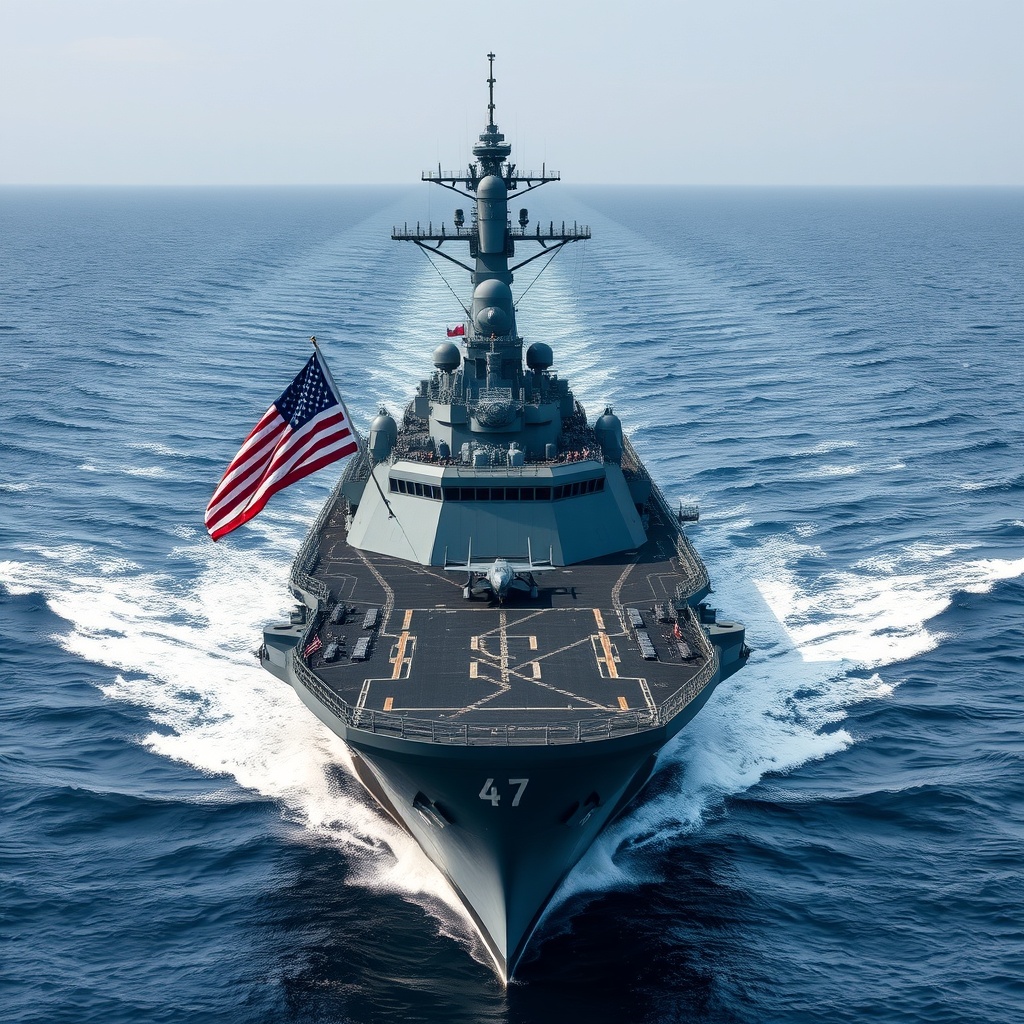
On a historic day in Washington, D.C., President Donald J. Trump, alongside Secretary of the Navy John C. Phelan and Secretary of War Pete Hegseth, announced a groundbreaking development in the United States' naval capabilities: the introduction of a new battleship. This announcement marks a significant shift in the country's military strategy, underscoring its commitment to strengthening its naval presence and ensuring the security of its interests worldwide. The introduction of this new battleship is poised to have far-reaching implications, both domestically and internationally, as it represents a substantial investment in modernizing the U.S. Navy's fleet and enhancing its operational capabilities.
Background and Context
The decision to announce a new battleship under President Trump's administration reflects a broader policy aim to revitalize and expand the U.S. military, particularly its naval component. The U.S. Navy has historically played a pivotal role in projecting American power, protecting sea lanes, and contributing to the stability of global maritime trade. However, in recent years, the Navy has faced challenges related to budget constraints, aging vessels, and the rising naval capabilities of potential adversaries. The announcement of a new battleship is a response to these challenges, signaling a renewed commitment to naval supremacy and the ability to deter potential threats.
The U.S. has a long and storied history with battleships, which have been a cornerstone of its naval power since the early 20th century. Although the role of battleships evolved significantly over the years, especially with the advent of aircraft carriers and submarines, their symbolic and actual military value remains significant. The introduction of a new, technologically advanced battleship suggests an effort to blend historical prowess with modern capabilities, potentially incorporating advanced weaponry, stealth technology, and sophisticated command and control systems.
Design and Capabilities
While specific details about the design and capabilities of the new battleship were not immediately available, it is expected to incorporate cutting-edge technology that enhances its combat effectiveness, survivability, and sustainability. Modern battleships are designed to be multi-mission platforms, capable of engaging in a wide range of operations from sea control and power projection to humanitarian assistance and disaster response. The integration of advanced sensors, communication systems, and weapon platforms, such as railguns, laser weapons, or hypersonic missiles, could significantly enhance the battleship's lethality and flexibility.
Moreover, the new battleship is likely to be designed with considerations for reduced manpower requirements, increased automation, and improved environmental sustainability. The use of more efficient propulsion systems, for example, could reduce the ship's operational costs and environmental footprint, making it a more viable asset for extended deployments. The incorporation of unmanned systems and artificial intelligence could also enhance the ship's situational awareness and response capabilities, further amplifying its effectiveness in various scenarios.
Economic and Industrial Impact
The announcement of a new battleship also has significant economic and industrial implications. The construction of such a vessel will involve major defense contractors and numerous smaller businesses across the supply chain, potentially creating thousands of jobs and stimulating local economies. The shipbuilding industry is a critical component of the U.S. defense industrial base, and large-scale projects like this can have a multiplier effect, driving innovation and investment in related sectors such as steel production, electronics, and advanced materials.
Furthermore, the development and procurement of a new battleship will necessitate substantial investment in research and development, focusing on areas such as materials science, propulsion systems, and cybersecurity. This could lead to spin-off benefits for the broader economy, as technologies developed for military applications often find their way into civilian use, driving innovation and competitiveness.
International Implications
The introduction of a new U.S. battleship is likely to have international implications, as it will be perceived as a demonstration of American military power and a commitment to maintaining a strong naval presence globally. Allies may view this development as a reassuring sign of U.S. resolve to defend shared interests and maintain stability in key regions. Conversely, potential adversaries may interpret the move as a signal of increased U.S. military assertiveness, potentially leading to a reevaluation of their own naval strategies and capabilities.
In the context of rising tensions and competition among major naval powers, the announcement of a new battleship underscores the importance of sea power in geopolitical affairs. The U.S. Navy's ability to operate freely and project power across the globe is fundamental to its role in maintaining international security and facilitating global trade. The introduction of a new, advanced battleship will contribute to this capability, ensuring that the U.S. remains a preeminent naval power.
Conclusion
The announcement of a new battleship by President Trump, Secretary of the Navy John C. Phelan, and Secretary of War Pete Hegseth marks a significant development in U.S. naval policy and military strategy. This move reflects a commitment to enhancing the U.S. Navy's capabilities, ensuring its continued relevance and effectiveness in a rapidly changing geopolitical landscape. As the world's oceans become increasingly contested, the introduction of a modern, technologically advanced battleship positions the U.S. to meet emerging challenges and protect its vital interests.
The economic, industrial, and international implications of this announcement are far-reaching, promising to stimulate American industry, drive technological innovation, and reinforce the U.S. position as a global maritime leader. As the details of the new battleship's design, capabilities, and deployment become clearer, it will be important to consider how this development fits into the broader context of U.S. military strategy and international relations. One thing is certain, however: the introduction of a new battleship represents a significant investment in the future of the U.S. Navy and a testament to the enduring importance of sea power in American defense policy.

Leave a comment